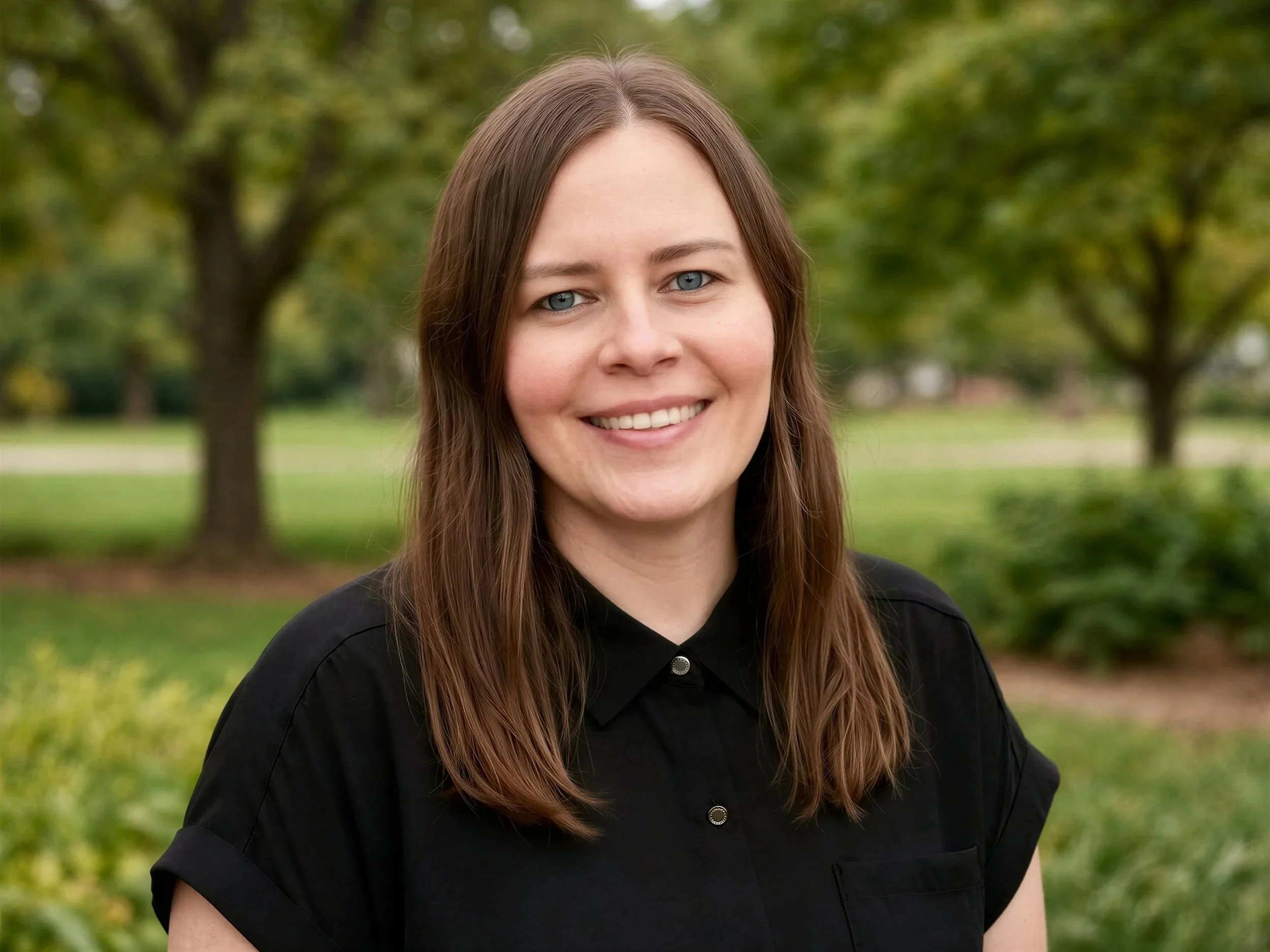
Denise Erland, FNP-C

Board-Certified Nurse Practitioner | Metabolic & Hormonal Medicine

Board-Certified Family Nurse Practitioner · Functional Medicine Certified Practitioner · Functional Metabolic Weight Management Certification · Advanced Hormone Dynamics in Women Certification · 18 Years Clinical Experience

I built Midlife Metabolic Medicine around one clinical question: What is actually driving this patient's weight loss resistance — and what must shift, and in what order, for results to become physiologically sustainable?

That question does not get answered in a 15-minute primary care visit. It does not even get asked by telehealth platforms prescribing GLP-1 medications with minimal evaluation. And it is consistently dismissed by a healthcare system that routinely ignores the metabolic and hormonal complexity of individuals in perimenopause.

My practice exists to ask that question properly — and to build your metabolic and hormonal care plan around the answer.

Clinical background

I am a board-certified Family Nurse Practitioner with 18 years of clinical experience along with specialty certifications in functional medicine, functional metabolic weight management, and advanced hormone dynamics in women. This specific intersectionmetabolic, hormonal, and functionalis what allows me to evaluate your health as a single, integrated system rather than a collection of isolated symptoms.

Before founding this practice, I spent twelve years of my career in critical caremost of them in adult medical intensive care, with the remainder in emergency medicine.

Critical care is where you learn to master complex, multi-system physiology under pressure: overlapping lab abnormalities, competing metabolic demands, and patterns that only become visible when you evaluate the whole picture at once. That training is the foundation of how I practice metabolic medicine today. I look at your labs, hormone panels, symptom patterns and history to identify which disruption is most upstream of the others, ensuring we pull the lever that will produce the most meaningful shift in your health.

My academic training spans institutions including Bryn Mawr College, Indiana University, and Rush University. My clinical training environments included Northwestern Medicine and St. Luke's Health System. I am licensed to provide care via telehealth to patients across Oregon and Idaho.

Why I chose this work

I have spent my entire life resisting systems that fail women and LGBTQ+ individuals.

Raised in a fundamentalist, authoritarian, religious family and community, I learned early what it felt like when a woman's value was tied to submission and domestic servitude. In that environment, a woman's access to education, healthcare, professional achievement — and even the right to her own identity — were gated by male authority. Who she was and who she might become were decisions held by others.

I left that family and community context while still in high school to seek a different life, working full-time to support myself while earning academic scholarships to institutions I otherwise could not afford. Through stretches of housing and food insecurity, I remained driven by a single conviction: that education was the door to the life I desired — one rooted in autonomy, self-determination, and the freedom to exist fully, as who I am. I committed to it accordingly.

These formative experiences — as a girl who learned the cost of misogyny, out loud, and as a lesbian who could not yet safely say so, in silence — created in me a deep intolerance for systems that erase, silence, and ultimately subjugate any human being, and a deep commitment to building something better for the people those systems are designed to break.

The catalyst

I built this practice at a moment when women’s rights, LGBTQ+ rights, and equitable healthcare access are being systematically dismantled in this country — and when too many of the systems delivering healthcare to women and LGBTQ+ patients have aligned themselves, by policy or by silence, with that dismantling.

So I built a practice outside those systems — one that centers the very patients those systems are designed to break.

Midlife Metabolic Medicine is the result: a metabolic and hormonal medical home designed specifically for any person experiencing natural perimenopause — a stage of life when the healthcare system is most likely to dismiss patients' experiences, minimize their concerns, and offer solutions that fail to match the complexity of their biology.

Putting my expertise to work in a practice that prioritizes patients whose healthcare access, economic security, and civil rights are increasingly under attack is both an act of service and an act of resistance. I do not separate the two. These convictions shape not just why I practice, but how.

How I think about metabolic and hormonal care

Most weight loss approaches start with the same question: How do we get you to eat less?

I start with a different one: What is your body actually doing with the energy it receives, and what needs to shiftand in what orderfor it to cooperate with weight loss?

Your body is a regulatory system. It reads signals from your hormones, your sleep, your stress response, your gut, and your metabolic markers to make a single decision: burn or conserve. When those signals communicate instability, your body mounts what I call an adaptive defense. It slows your metabolism, increases hunger, and resists fat loss. This is not a malfunction. It is your biology doing exactly what it was designed to do.

My clinical frameworkthe Adaptive Defense Modelis built around resolving the reasons your body is defending, rather than trying to overpower the defense. It is organized around five clinical principles that govern every decision I make. In practice, that might mean stabilizing your sleep and protein intake before introducing a caloric deficit, or establishing blood sugar control before prescribing a GLP-1. When hormone replacement therapy is indicated, the same framework determines the timingbecause sometimes hormonal instability is what is driving the metabolic resistance, and sometimes it is the other way around. The order of care is just as critical as the intervention itself.

A solo telehealth practice by design, not default

Telehealth is not a concession. It is the ideal modality for this kind of care.

Metabolic and hormonal care is longitudinal and data-driven. The work happens through labs, biometric data, medication management, and structured conversation — not procedures. Telehealth does that work well. It also removes the geographic constraint on expertise, which matters when the kind of care you need is not available in your local healthcare system. And for a structured five-month program with biweekly visits, it lowers the cost of staying engaged — no commute, no waiting rooms, no half-days off work for a single appointment.

A solo telehealth practice with a defined patient panel allows me to provide a depth of attention that larger healthcare systems structurally cannot. I know your full metabolic and hormonal history. I review your biometric data at every visit, and at structured intervals in between. I am the same provider at your first appointment and your fiftieth. That continuity is not a feature of the program — it is the foundation of your care.

The same design choice that lets me know your full clinical history also lets me build a practice explicitly around the people this care is for. Midlife Metabolic Medicine is woman- and LGBTQ+ owned, and we are an inclusive and affirming environment, welcoming patients from across the full spectrum of gender and sexual identity. Our approach is trauma-informed and built around your specific physiology and life context — because resolving metabolic resistance requires a foundation of safety.

If you are ready to address your metabolic and hormonal health with the same rigor you bring to the rest of your life, I built this practice for you.

If you are ready for a different kind of care

Whether you are ready to begin the clinical work or want to talk first, both paths can lead to the same clinical relationship — and to the same depth of attention.

The Metabolic Evaluation is the start of the clinical work itself. The Discovery Visit is a brief conversation if you would like to ask questions, share what is bringing you here, and get a sense of fit before committing.

The Metabolic Evaluation

$595 · 4 weeks · Credited in full toward the Metabolic Rebuild

The clinical starting point. A comprehensive intake, full metabolic and hormonal lab assessment, and a structured review of findings — yours to keep, whether or not you continue.

Schedule a Metabolic Evaluation

The Discovery Visit

No-charge · 15 minutes

A brief introductory conversation if you would prefer to speak with me directly before scheduling the evaluation.

Schedule a Discovery Visit